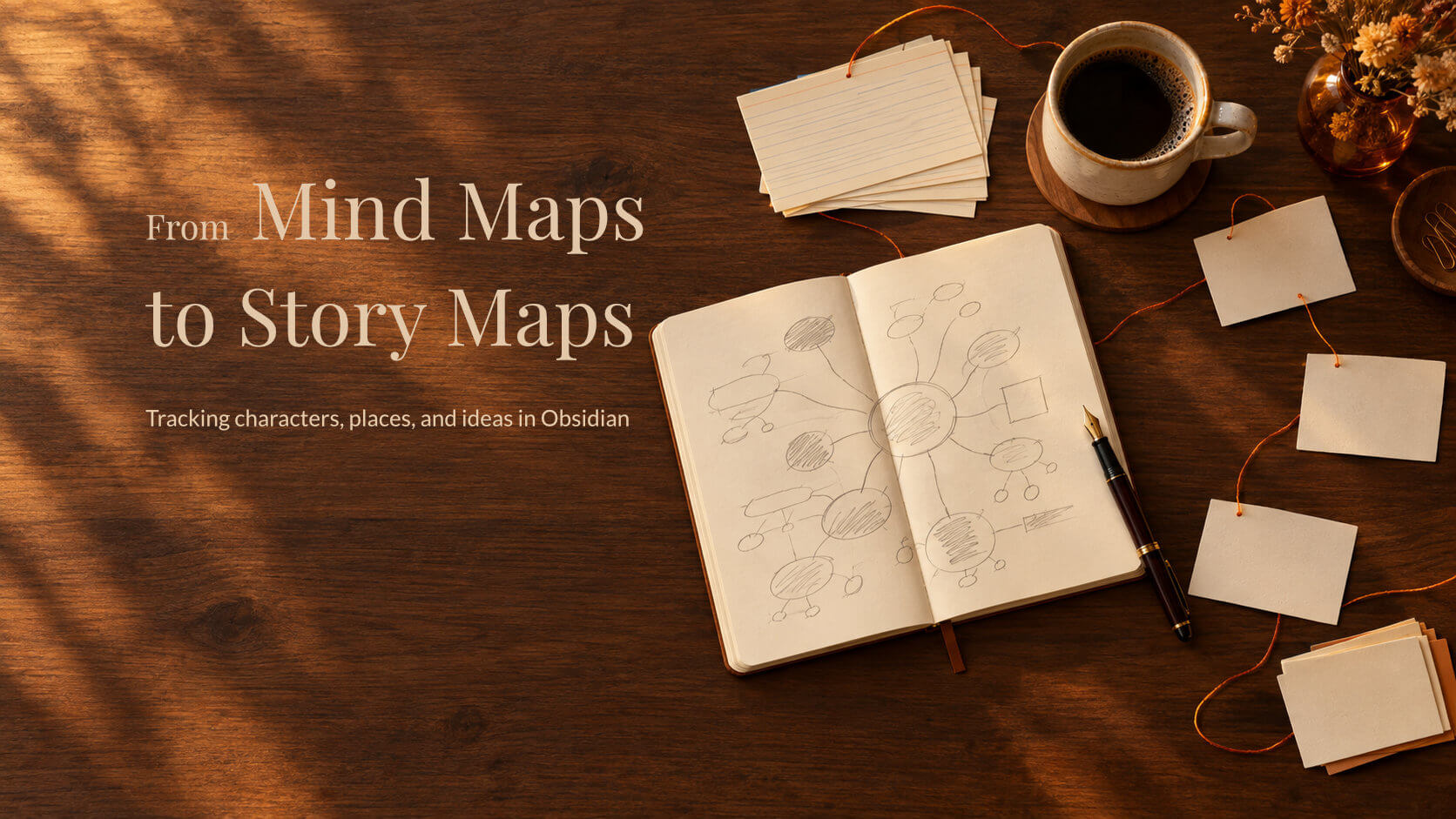
Training #655 — From Mind Maps to Story Maps
Mind maps are a great way to start a book. You put one idea in the middle and let everything branch out from there. But once you start writing, characters move from chapter to chapter, clues show up early and pay off late, and themes run all the way through. A mind map can only put each idea in one spot, so the book quickly outgrows the page.
In this training, I’ll show you how I keep track of everything that lives between the chapters using Obsidian, a free app that stores your notes as plain text files on your own computer. Each character, place, or idea gets one note, and every chapter that needs it links to it. We’ll skip most of the slides and click through real example vaults together. We’ll start with a single book, move up to a full fourteen-book series bible, look at a non-fiction book in progress, and finish with a starter vault you can use for your own book that afternoon.
You don’t need any experience with Obsidian, and we’ll stick to the basics. If you’d like to follow along, download Obsidian from obsidian.md. All of the public domain example vaults, plus the free starter vault, are available to download below.

This is for Apex Authors
JOIN NOW FOR FREEApex Authors is the premier online community of modern independent publishers in the world. Become an Apex Author today and get access to all of our training and archives, as well as our proprietary software tools to help you publish and sell your books!
Already an Apex Author? Click here to sign in.