The Fine Line Between Research, Credit, and Adaptation
In a recent news/hot seats training, we talked about how copyright and adaptation coincide with source materials and research. We covered a story about research, credit, and the blurry line between inspiration and adaptation, and it’s the kind of thing every author should have on their radar.
Here’s what happened.
Two books, same title, almost the same cover
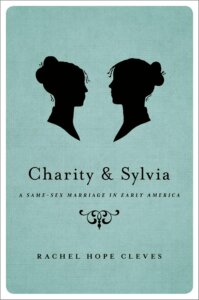
In 2014, an author named Rachel Hope Cleves published Charity and Sylvia: A Same-Sex Marriage in Early America. It was the product of years of painstaking archival research (original documents, letters, diaries) spread across multiple states. She pieced together the story of two women in 19th-century Vermont whose relationship was, by any reasonable measure, a marriage before marriage was legal.
The book was well received. It won awards. It was the kind of deeply researched, carefully argued work that becomes the definitive account of its subject.
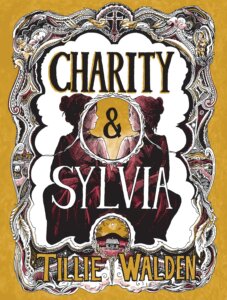
Then, more recently, the former cartoonist laureate of Vermont produced an approachable history of the same story for a broader audience. The result was a graphic novel called Charity and Sylvia, featuring a cover with two women facing each other. Sound familiar?
Cleves was not involved. She wasn’t credited as a source beyond a mention in the bibliography and a resource link on the book’s website. And she’s been public about her disappointment… not because she thinks the law was broken, but because she feels the new book wouldn’t exist without her original research, and she should have an option for the adaptation, a co-credit, and appropriate compensation.
What the law says vs. what the community expects
Here’s the thing: legally, this is almost certainly fine. Copyright protects the expression of an idea — the specific words on the page — not the underlying facts or research. You can’t copyright a historical event. You can’t copyright the fact that two women lived together in Vermont in the 1820s and wrote each other letters. Those facts, however hard-won, belong to everyone once they’re published.
The graphic novelist’s team did what the law requires: they cited their sources. They didn’t copy Cleves’s prose. They created a new work in a new medium.
And yet.
Erin put it perfectly during the training: “It really comes down to playing nice in the community — making friends and not enemies.” The law draws one line, but professional courtesy often draws another one, a little further out. You don’t have to call the author whose decade of archival digging made your graphic novel possible. But it’s hard to imagine a world where doing so wouldn’t have been the right move.
What this means for you
This story sits at the intersection of two things we’ve been talking about a lot lately: research (how to do it, how to organize it, how to use it) and the practical realities of publishing (copyright, adaptation, and playing fair).
A few takeaways I keep coming back to:
- Your research is your research — until you publish it. Once those facts are out in the world, they’re fair game for anyone. That’s not a bug in the system; it’s how knowledge advances. But it does mean you should think carefully about what you share before your book comes out.
- If you’re building on someone else’s research, reach out. It costs you nothing to send a short email: “Hey, your work was instrumental to my project. I’d love to acknowledge you properly — would you prefer a mention in the acknowledgments, a quote, or something else?” Most people say yes. Some become allies. A few might even help promote your book.
- Credit in the bibliography is the floor, not the ceiling. It satisfies the legal requirement. It doesn’t necessarily satisfy the human one. If someone’s work saved you years of archival travel, consider whether they deserve more than a footnote.
- Know what your audience expects. Erin made this point in our Part 1 Q&A, and it applies here too. Some genres and communities have higher standards for attribution and authenticity than others. If you’re writing in a space where authors talk to each other — and most of us are — your reputation matters.
The Research Iceberg
Research is an iceberg; the idea that 90% of what you learn never appears on the page, but it’s what keeps the visible 10% from tipping over. That invisible 90% is your ballast. We go into a lot more detail in our Author Research trainings.
The Charity and Sylvia story is a reminder that the iceberg doesn’t just support your book; it represents real work by real people. Some of them are still alive. Some of them built their careers on what you’re now using. Treating that work with care isn’t just ethical; it’s how you earn the kind of reputation that opens doors for your next book, and the one after that.